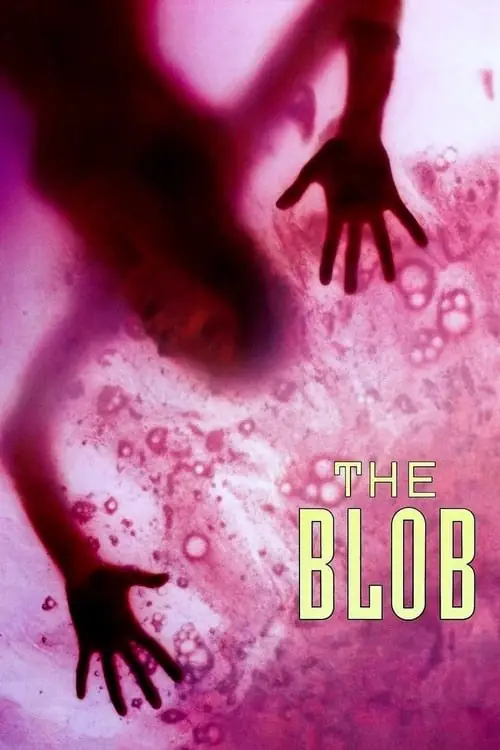
INT. GALLERY ROOM — HORROR · SHADOW GALLERY — DAY
Chuck Russell's 1988 reimagining of the 1958 B-movie classic The Blob stands as a singular achievement in the often-dismal landscape of horror remakes—a film that honours its source material's spirit while radically transforming its substance. The narrative retains the essential architecture of the original: a small California town, a trio of teenagers, and an amorphous extraterrestrial organism that consumes everything in its path, growing larger and more voracious with each victim. What Russell and co-writer Frank Darabont bring to this familiar framework is a level of craft, thematic ambition, and unapologetic brutality that transforms a creature-feature curiosity into a genuinely unsettling work of body horror.
The film's most significant departure from its predecessor is its refusal to observe the conventions of 1950s cinematic propriety. Where the original's monster was content to consume anonymous townsfolk, Russell's Blob demonstrates a shocking willingness to dispatch characters whom genre convention has trained audiences to consider safe: children, sympathetic authority figures, and even characters who appear to be positioned as protagonists. This narrative ruthlessness generates a pervasive atmosphere of genuine dread, a sense that the film's universe operates according to principles that are not merely hostile but fundamentally indifferent to human notions of narrative justice. The creature itself, realized through a combination of practical effects that remain impressive decades later, is a masterpiece of viscous, undulating menace—an organism whose very formlessness constitutes its most terrifying attribute.
CUT TO: THE WORK UNFOLDS
The screenplay, co-written by Darabont before his ascent to directorial prominence, embeds a subversive political subtext within the genre framework. The film's genuine villains are not the blob itself but the government officials who view the creature as a bioweapon opportunity rather than a threat to be neutralized. This Cold War-era paranoia about institutional betrayal—the fear that the institutions designed to protect citizens are actually complicit in their endangerment—resonates with the post-Watergate, post-Vietnam cynicism of the Reagan era. The teenagers' struggle against both the creature and the authorities who would sacrifice them transforms the film from a simple monster movie into a parable about the betrayal of civic trust.
The technical accomplishments of the production deserve particular recognition. The practical effects team, working in an era before digital manipulation became the default solution, created a creature whose transformations—from translucent gelatin to pulsating, blood-red mass—retain a physical presence that computer-generated imagery has rarely matched. The set-piece sequences, including a notorious scene in a hospital and a climax set in the town's frozen streets, demonstrate Russell's command of spatial dynamics and his understanding that horror is most effective when the audience has a clear sense of the geography in which the threat operates. The Blob is a film that understands its genre deeply, respects its audience's intelligence, and delivers its pleasures with the confidence of a work that knows exactly what it is and what it wants to accomplish.
Source Reference
Original archive log: https://www.themoviedb.org/movie/9599?language=en-US