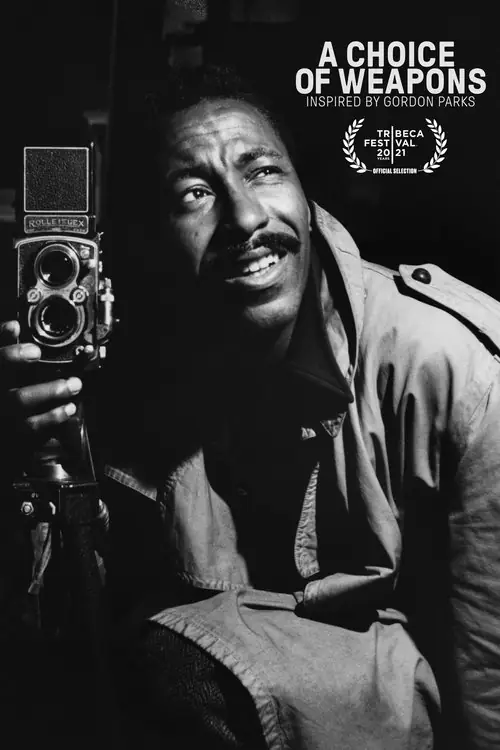
INT. GALLERY ROOM — ACTION · MOVING FRAMES — DAY
This luminous documentary portrait traces the extraordinary trajectory of Gordon Parks, a polymathic creative force who shattered racial barriers across multiple artistic disciplines during the twentieth century. The film unfolds as a meditation on how one man's indomitable gaze—first through the viewfinder of a camera, then through the written word, and finally through the cinema lens—fundamentally altered the way America saw itself and its deepest contradictions. Parks emerged from a childhood marked by poverty and segregation in Fort Scott, Kansas, yet his relentless self-education and unshakeable conviction in the power of visual storytelling propelled him into the upper echelons of American cultural production. The documentary's narrative architecture mirrors Parks's own artistic philosophy: it refuses to compartmentalize his achievements into separate domains, instead presenting photography, literature, and filmmaking as interwoven strands of a single, lifelong inquiry into the nature of human dignity.
The documentary devotes considerable attention to Parks's tenure at LIFE magazine, where his photographic essays captured the intimate textures of Black American existence with an authority that could only come from lived experience. His images of Harlem families, of the Fontenelles at the poverty line, of the civil rights movement's most charged moments, functioned not merely as reportage but as profound acts of witness and moral intervention. The filmmakers astutely position Parks's camera as a 'choice of weapons'—a phrase borrowed from his own writings—underscoring his belief that art could serve as a nonviolent instrument of social transformation with consequences as tangible as any political action. The film draws upon a rich archive of Parks's own images, allowing them to breathe on screen in extended sequences that replicate the contemplative experience of encountering his work in a gallery setting, where the viewer is invited to sit with the weight of what is being shown rather than rushing toward the next narrative beat.
CUT TO: THE WORK UNFOLDS
Equally compelling is the film's treatment of Parks's transition into cinema, where he became the first Black director to helm a major Hollywood studio feature with The Learning Tree, an adaptation of his own autobiographical novel. The documentary draws illuminating parallels between his photographic composition and his cinematic framing, revealing a consistent visual grammar rooted in chiaroscuro lighting, dignified portraiture, and an unflinching yet compassionate confrontation with suffering. His later work on Shaft not only established the template for the Blaxploitation genre but also fundamentally reshaped the iconography of Black masculinity on screen, a cultural reverberation that the film examines with nuanced historical perspective. The documentary's interviews with contemporary artists and scholars map the genealogy of influence that extends from Parks through successive generations of Black image-makers, constructing a lineage that is both a tribute and a call to continued action.
Beyond its biographical narrative, the documentary functions as an urgent meditation on the role of the artist as public intellectual and moral compass. Through interviews with contemporary photographers, filmmakers, and scholars who trace their own creative lineages back to Parks, the film constructs a compelling argument about the enduring relevance of his humanistic vision. In an era of fragmented media and algorithmic image-making, Parks's insistence on the photograph as a tool for empathy and justice feels not nostalgic but prophetic. The documentary ultimately leaves viewers with a galvanizing question: what will we choose as our own weapons in the ongoing struggle for a more truthful representation of the human condition?
Source Reference
Original archive log: https://www.themoviedb.org/movie/822100?language=en-US