INT. GALLERY ROOM — SCI-FI · TOMORROW'S FRAME — DAY
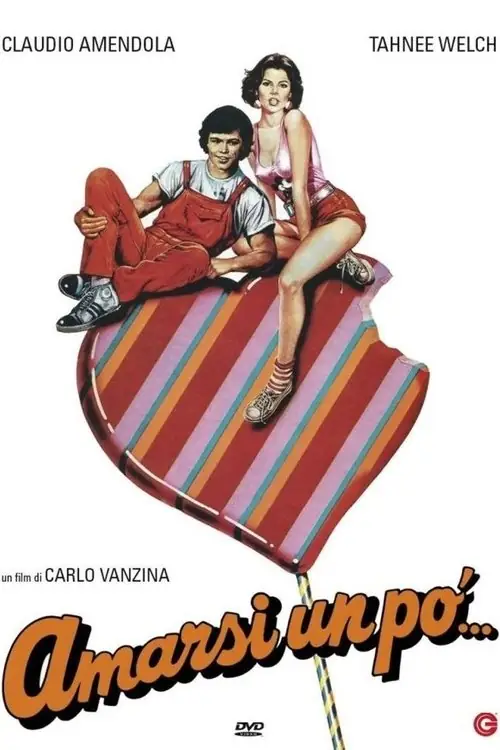
This effervescent Italian romantic drama from the mid-1980s operates within the venerable tradition of cross-class love stories that have animated European cinema since the commedia dell'arte, yet it infuses the formula with a distinctly contemporary anxiety about social mobility and the intractability of inherited privilege. The narrative follows Marco Coccia, a young auto mechanic whose ordinary existence is upended when a chance encounter—a traffic accident, of all things—brings him into the orbit of Cristiana, a woman who turns out to be genuine royalty. The collision is literal and metaphorical, a device the film deploys with knowing wit even as it mines the situation for genuine pathos. The screenplay, co-written by director Carlo Vanzina with Enrico Vanzina, demonstrates the brothers' characteristic talent for balancing the effervescent surface pleasures of the commedia all'italiana with an undercurrent of genuine social critique that rewards attentive viewing.
What elevates the film beyond its seemingly frothy premise is its acute sensitivity to the psychological costs of romantic idealism. Marco is not merely a working-class hero whose nobility of spirit conquers all obstacles; he is a young man genuinely bewildered by the machinery of class distinction, unable to comprehend why love should be subject to the approval of parents who measure human worth in bloodlines and bank accounts. Cristiana's position is equally nuanced—she is neither a rebellious princess eager to abdicate her responsibilities nor a passive victim of dynastic expectations, but a young woman caught between genuine affection and the gravitational pull of a world she has never known how to leave. The performances by Claudio Amendola and the luminous Tahnee Welch invest these archetypes with a specificity that prevents them from becoming mere ciphers in a social allegory; their chemistry is palpable, and the film takes its time establishing the texture of their connection before subjecting it to external pressures.
CUT TO: THE WORK UNFOLDS
The film's visual language reinforces this thematic tension through a careful calibration of spaces. Marco's workshop, with its grease-stained floors and honest machinery, is rendered with the same loving attention as the opulent interiors of Cristiana's family estate, suggesting that the film accords equal dignity to both worlds even as it dramatizes the impossibility of their reconciliation. The director's use of soft-focus close-ups during the lovers' private moments creates a tactile sense of intimacy that makes the subsequent forced separation feel like a physical wound, a violation of something sacred that society's rigid hierarchies have no right to adjudicate. The cinematography, by Luigi Kuveiller, employs a palette that shifts subtly between the warm, earthy tones of Marco's milieu and the cooler, more formal hues of the aristocratic sphere, a color-coding of class that operates almost subliminally on the viewer's perception.
The tragic denouement—Marco's desperate race toward Paris upon learning of Cristiana's impending arranged marriage, culminating in another accident, this one fatal—transforms what might have been a light comedy of manners into something closer to operatic tragedy. This tonal shift is audacious, and it speaks to the film's deeper conviction that the barriers erected by class are not merely inconvenient but lethal, capable of destroying those who dare to love across their boundaries. The final images linger in the mind long after the credits roll, a haunting reminder that in the war between love and social order, the casualties are always human. The film thus earns its place in the long tradition of Italian cinema's interrogation of the costs of social stratification, from Visconti to Scola, even as it wraps its critique in the accessible pleasures of popular entertainment.
Source Reference
Original archive log: https://www.themoviedb.org/movie/58087?language=en-US