INT. GALLERY ROOM — SCI-FI · TOMORROW'S FRAME — DAY
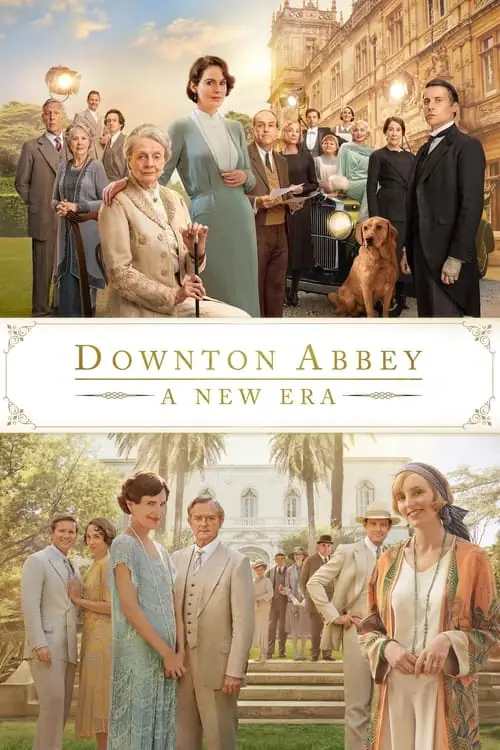
Simon Curtis's 2022 continuation of the Crawley family saga arrives as a masterclass in heritage cinema, a genre that British filmmakers have elevated to something approaching a national art form. The film's bifurcated narrative structure—one thread following the aristocratic family to a sun-drenched villa on the French Riviera, the other tracing the comic chaos that ensues when a Hollywood film crew commandeers the eponymous Yorkshire estate—represents a canny structural decision that allows the film to simultaneously honor its televisual roots and expand into genuinely cinematic territory. The southern French sequences, bathed in a golden Mediterranean light that stands in stark contrast to the cool, misty palette of the Yorkshire scenes, provide the Dowager Countess with an elegiac final act that Dame Maggie Smith invests with the full weight of her formidable dramatic arsenal. The mystery of the inherited villa—a bequest from a long-dead French aristocrat whose connection to the Dowager is gradually, tantalizingly revealed—functions as both a plot mechanism and a meditation on the secrets that even the most proper Edwardian lives inevitably harbor.
The parallel storyline, in which a silent-film director played with disarming charm by Hugh Dancy arrives at Downton to shoot his latest production just as the industry convulses with the transition to talkies, serves as the film's most inspired meta-cinematic gesture. The collision between the staid, ritual-governed world of the English country house and the chaotic, improvisational energy of a film set generates much of the film's most effervescent comedy, but it also provides a poignant commentary on the passage of time and the inexorable march of modernity. The servants, so long confined to the shadows of the great house, find themselves thrust into the spotlight—both literally and figuratively—as the film crew discovers that their faces and voices possess a cinematic quality that the professional actors, trained in the exaggerated gestural language of silent performance, cannot match. Lady Mary, played by Michelle Dockery with the same steely grace that has defined the character across six seasons and two films, emerges as the bridge between these two worlds, her aristocratic composure gradually yielding to a genuine fascination with the democratic possibilities of the new medium.
CUT TO: THE WORK UNFOLDS
Curtis, working from a screenplay by series creator Julian Fellowes, orchestrates these parallel narratives with the assurance of a conductor who knows his orchestra intimately. The film's emotional architecture is built on the tension between tradition and transformation, between the gravitational pull of the past and the centrifugal force of the future. Every character is granted a moment of reckoning, a beat in which they must decide whether to cling to the certainties of the old order or embrace the terrifying, exhilarating unknowns of the new. The cinematography, by Andrew Dunn, deserves particular praise for its ability to distinguish between the two visual registers: the English sequences are composed with a Vermeer-like attention to interior light and domestic geometry, while the French sequences open up into widescreen vistas of azure sea and terracotta rooftops that evoke the painterly tradition of the Côte d'Azur. The film's ultimate triumph lies in its refusal to condescend to either its characters or its audience. It understands that the rituals of the country house, the elaborate etiquette of the dinner table, the carefully calibrated hierarchies of the servant's hall, are not merely antiquarian curiosities but genuine expressions of a way of life that, for all its manifest inequalities, possessed a kind of coherence and dignity. 'A New Era' is, in the final analysis, a film about letting go—of houses, of hierarchies, of the people we love—and it accomplishes this with a grace that brings a lump to the throat.
Source Reference
Original archive log: https://www.themoviedb.org/movie/820446?language=en-US