INT. GALLERY ROOM — SCI-FI · TOMORROW'S FRAME — DAY
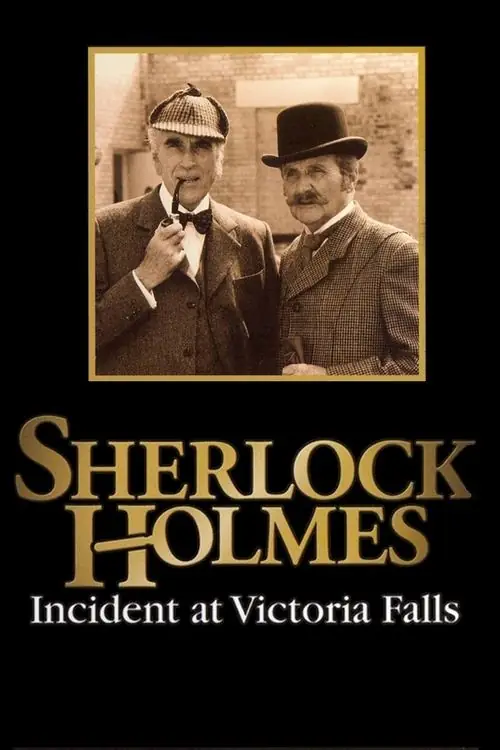
The enduring fascination with Arthur Conan Doyle's consulting detective has produced a cinematic corpus so vast that any new addition must contend with the weight of accumulated interpretation, and Incident at Victoria Falls positions itself with quiet confidence within this crowded field. The film's narrative premise — King Edward himself entreats Holmes to undertake one final commission before the great detective withdraws into the Sussex beekeeping that canon promises — carries an immediate emotional charge for devotees of the Holmesian universe. The mission is deceptively straightforward: escort the Star of Africa, a diamond of legendary proportions, on its journey to Cape Town. That the jewel is inevitably stolen and that bodies begin to accumulate is, of course, less a plot twist than a genre obligation, and the film fulfills it with the assurance of a practiced hand. What distinguishes this particular Holmes adventure is its geographical imagination: the shift from the familiar London fog to the sun-scorched vistas of the colonial outpost introduces a visual and thematic register that the Holmes canon has rarely exploited. The cinematography embraces the journey as a structuring principle, with the locomotive rhythms of the transcontinental voyage providing a meditative counterpoint to the narrative's accelerations into violence. The landscape itself becomes a character — vast, indifferent, resistant to the deductive certainties that Holmes deploys so effortlessly within the contained spaces of Baker Street. This dislocation is thematically productive: the film becomes, in part, a meditation on the limits of rationalism, on what happens when the greatest deductive mind in literature is transplanted into an environment where the rules of evidence and inference are rendered unstable by the sheer foreignness of the terrain. The colonial context is handled with more nuance than one might expect from a genre piece; the film does not ignore the uncomfortable power dynamics of British imperialism, though it stops short of the full-throated critique that a more revisionist treatment might attempt. The dynamic between Holmes and his colonial counterparts introduces a layer of cultural friction that enriches the procedural elements without derailing the narrative's momentum. The director's approach to the Holmes character hews faithfully to the canonical template — the cerebral abstraction, the flashes of dry humor, the underlying melancholy of a mind that cannot rest — while allowing the actor sufficient room to invest the performance with his own interpretive inflections. The emotional architecture of the film pivots on the tension between Holmes's stated desire for retirement and the unmistakable vitality that surges through him when presented with a suitably complex puzzle. This is a Holmes who professes weariness but whose every gesture betrays an addiction to the chase that no amount of beekeeping could ever satisfy. The supporting characters are drawn with economy and precision, each suspect and ally contributing a distinct note to the symphony of misdirection that the plot orchestrates. As a contribution to the broader Holmesian tradition, the film occupies an honorable position: it is neither the most radical reinterpretation nor the most faithful transcription, but a work that understands the pleasures of the formula and executes them with genuine affection for the source material. The cultural significance of the Holmes figure — his embodiment of a particular fantasy of rational mastery in an irrational world — remains as potent as ever, and the film's willingness to test that fantasy against the disorienting realities of a world beyond the familiar is what gives it its modest but genuine distinction.
Source Reference
Original archive log: https://www.themoviedb.org/movie/79106?language=en-US