INT. GALLERY ROOM — SCI-FI · TOMORROW'S FRAME — DAY
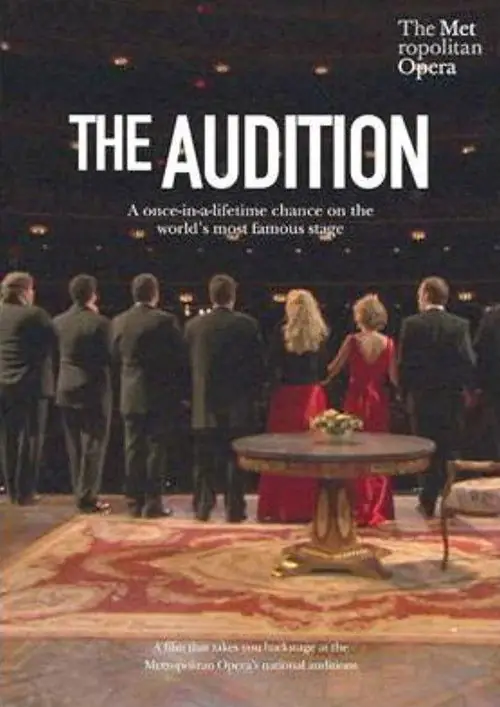
The audition occupies a singular position in the ecology of the performing arts—a liminal space suspended between aspiration and judgment, between the private labor of preparation and the public arena of performance, between the self as it is and the self as it wishes to be seen. The Audition, a documentary that embeds itself within the Metropolitan Opera's grueling selection process, transforms this charged space into a site of sustained cinematic inquiry. The film follows ten singers through the crucible of the Met's National Council Auditions, a competition whose stakes are difficult to overstate: for an emerging opera singer, a successful showing at this level can function as a career-defining inflection point, the moment when years of training, sacrifice, and deferred gratification either crystallize into professional possibility or dissolve into the painful acknowledgment of limitation. The documentary's power derives from its willingness to sit with the discomfort of this uncertainty, to resist the temptation to impose narrative closure on processes whose outcomes remain genuinely in doubt.
The film's formal strategy is characterized by a disciplined observational approach that recalls the tradition of Direct Cinema while adapting it to the specific demands of its subject. The camera maintains a respectful proximity to the singers, close enough to register the minute fluctuations of expression and posture that betray the psychological state beneath the performance surface, yet never so intrusive as to become a factor in the drama it documents. The audition sequences themselves are captured with a technical sophistication that honors the acoustic demands of the operatic voice: the sound design preserves the spatial characteristics of the performance environment while ensuring that the singers' instruments are rendered with the clarity and presence that the art form demands. This audiovisual fidelity is not merely technical competence but a form of ethical commitment—a recognition that the documentary's first obligation is to be worthy of the art it documents, to serve as a transparent medium rather than a distorting lens.
CUT TO: THE WORK UNFOLDS
The documentary's emotional architecture is constructed around the tension between the extraordinary demands of the operatic vocation and the ordinary humanity of those who pursue it. The singers are revealed not as remote virtuosi but as individuals whose relationship to their art is complex, ambivalent, and shot through with the vulnerabilities that attend any life organized around a single, consuming ambition. The film captures the peculiar temporality of the audition experience—the long hours of waiting punctuated by the compressed intensity of the performance itself, the strange disjunction between the months of preparation and the minutes of judgment, the way that a career can pivot on a single held note or a momentary lapse of concentration. The interviews with the singers, interspersed with the audition footage, provide context without providing explanation: the film respects the mystery of talent, the irreducible gap between the biographical facts of a life and the inexplicable fact of a voice that can fill a hall with sound that seems to originate from somewhere beyond the merely physical.
Beyond its function as a document of a specific competitive process, The Audition serves as a meditation on the nature of artistic vocation itself. The film asks, implicitly, what it means to organize a life around the pursuit of an ideal that remains always just beyond reach—the perfect performance, the definitive interpretation, the moment when technique dissolves into transcendence. The operatic art form, with its demands for a combination of physical, intellectual, and emotional capacities that verges on the superhuman, provides an extreme case of the condition that defines all artistic practice: the perpetual gap between conception and execution, between the vision that drives the artist forward and the realization that always falls short. The documentary's refusal to resolve this tension—its willingness to end without the comfort of unambiguous triumph—constitutes an act of fidelity to the difficult truth that the artistic life is defined not by arrival but by the endless, necessary, and somehow beautiful labor of preparation.
Source Reference
Original archive log: https://www.themoviedb.org/movie/704427?language=en-US