INT. GALLERY ROOM — SCI-FI · TOMORROW'S FRAME — DAY
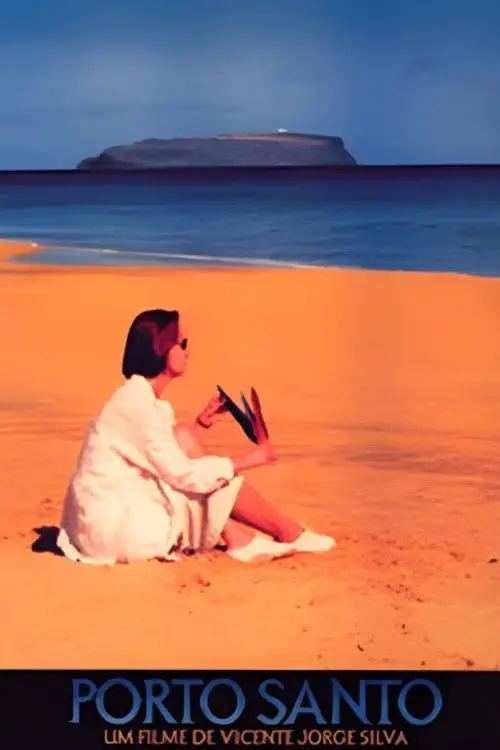
The Portuguese cinema has long demonstrated a particular affinity for narratives that unfold at the intersection of geography and psychology, stories in which the physical landscape functions not merely as setting but as a determinant of character and fate. Porto Santo, named for the small island in the Madeira archipelago, operates firmly within this tradition, deploying its insular location as both narrative catalyst and existential metaphor. The film's premise—a transatlantic flight diverted by mechanical failure to this remote outpost—establishes the framework for a drama of enforced stasis, a meditation on what happens when the forward momentum of modern life is interrupted by the contingencies of the material world. The protagonist, a photojournalist whose profession is defined by movement and observation, finds herself stranded in a place where the usual dynamics of departure and arrival have been suspended, and the film traces the consequences of this interruption with a patience that honors the unhurried rhythms of island existence.
The film's engagement with the legend of Christopher Columbus—who, according to local tradition, resided on Porto Santo for a period and conducted an affair with a widow and her daughter—introduces a historical dimension that complicates the contemporary narrative in productive ways. This legendary material is not deployed as straightforward parallel but as a kind of atmospheric residue, a set of stories that saturate the island's air and condition the possibilities of the relationships that develop among the present-day characters. The film suggests, without insisting, that the patterns of desire and transgression associated with the Columbus legend continue to reverberate, that the island functions as a kind of temporal palimpsest where past and present bleed into each other. The photojournalist's professional gaze—her instinct to frame and capture—is gradually transformed by exposure to a place where the boundaries between observer and observed, visitor and inhabitant, subject and object become porous and unstable.
CUT TO: THE WORK UNFOLDS
The cinematographic approach to Porto Santo's landscape resists the temptations of the picturesque. While the island's natural beauty is undeniable—the film does not suppress the visual pleasures of the Atlantic setting, the quality of light that has drawn travelers to Madeira for centuries—the camera consistently pulls back from postcard compositions, seeking instead the textures of lived space: the weathered surfaces of buildings, the routines of the local population, the particular quality of silence that settles over a place defined by its distance from metropolitan centers. This visual strategy aligns the audience's perception with the protagonist's gradual acclimatization, moving from the tourist's eye—which sees only surfaces—to the inhabitant's gaze, which registers the density of accumulated experience that saturates even the most apparently unremarkable locations. The film's pacing reflects this shift, its tempo slowing as the narrative deepens, its editing rhythms accommodating the elongated temporality of island life.
Porto Santo ultimately constructs a meditation on the nature of connection—between people, between past and present, between the self and the environments that shape it. The complex relationships that develop among the characters, including the secluded inhabitants whose lives the photojournalist gradually enters, are rendered with a psychological acuity that avoids both melodramatic excess and the austerity of pure observational cinema. The film understands that the romantic entanglements it depicts are not merely personal dramas but manifestations of the island's peculiar ontology—the way that enforced proximity and the suspension of normal temporal rhythms can accelerate intimacy, collapse defenses, and reveal dimensions of the self that the rush of ordinary life keeps safely submerged. In its patient attention to the specificities of place and the complexities of human interconnection, Porto Santo affirms the continued vitality of a tradition of European art cinema that locates the universal in the stubbornly particular, finding in the story of one woman's involuntary sojourn on a remote island a resonant inquiry into the conditions that make authentic encounter possible.
Source Reference
Original archive log: https://www.themoviedb.org/movie/591488?language=en-US