INT. GALLERY ROOM — SCI-FI · TOMORROW'S FRAME — DAY
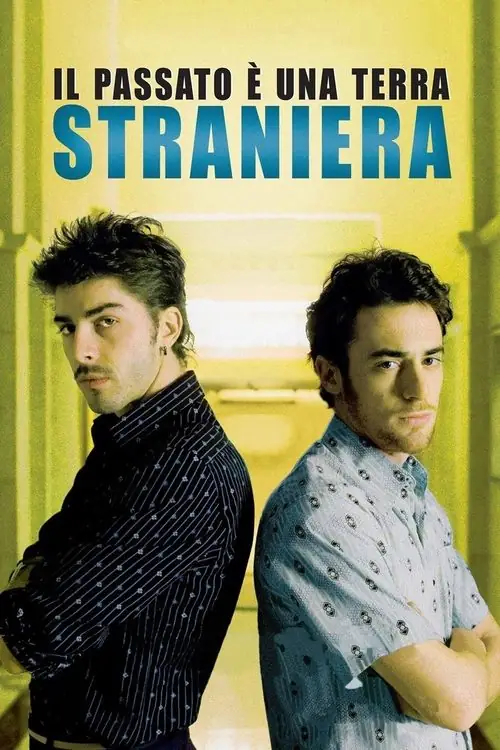
Giorgio, a young man of impeccable credentials and bright prospects, inhabits the orderly universe of lecture halls and legal textbooks—a universe where ambition follows a predictable, sanitized trajectory. His world tilts irrevocably when he crosses paths with Francesco, a magnetic cardsharper whose effortless charm conceals a predatory intelligence. What begins as an intoxicating flirtation with the forbidden soon unravels into something far more perilous: a systematic dismantling of Giorgio's moral architecture. Director Daniele Vicari, adapting Gianrico Carofiglio's novel with surgical precision, constructs a narrative that operates simultaneously as a psychological thriller and a philosophical inquiry into the plasticity of identity. The film interrogates whether morality is an intrinsic property of the self or merely a social performance maintained by circumstance—and what happens when that performance is no longer required.
Vicari's mise-en-scène mirrors Giorgio's internal disintegration with remarkable subtlety. The early sequences bathe the protagonist in the cool, rational light of institutional spaces, all clean lines and predictable framing. As the narrative descends into the nocturnal underworld of high-stakes card games and escalating criminality, the cinematography grows increasingly claustrophobic and disorienting. Shadows lengthen; spaces contract; the camera begins to linger on the characters' faces with an almost forensic intensity, mapping the erosion of conscience across the topography of Giorgio's features. The film's visual grammar argues that the boundary between civility and savagery is not a wall but a membrane—thin, permeable, and terrifyingly easy to breach.
CUT TO: THE WORK UNFOLDS
The performances are calibrated with extraordinary restraint. Giorgio's transformation is rendered not through histrionic moments but through progressive accumulations of micro-expressions, hesitations, and the gradual disappearance of the ethical reflexes that once defined him. His counterpart, Francesco, emerges as a figure of diabolical charisma—a Mephistophelean tempter who understands that true seduction lies not in force but in the promise of liberation from the self. Their relationship acquires an almost homoerotic charge, the intensity of their bond blurring the distinction between mentorship and mutual possession. The dynamic between the two men becomes the film's engine of dread, a slow-motion catastrophe that the audience is powerless to avert.
The film's title gestures toward a broader meditation on the relationship between memory, identity, and moral accountability. The past, Vicari suggests, is not merely a distant country with different customs—it is a territory we have been expelled from, a place where the person we once were speaks a language we can no longer understand. The tragedy of Giorgio's journey lies not simply in the crimes he commits but in the vertiginous recognition that the law student he was and the criminal he becomes are not two separate people but the same person revealed under different conditions of pressure. In its unflinching examination of moral relativism and the fragility of character, The Past Is a Foreign Land earns its place alongside the great European noir traditions while carving out territory distinctly its own.
Source Reference
Original archive log: https://www.themoviedb.org/movie/58086?language=en-US