INT. GALLERY ROOM — SCI-FI · TOMORROW'S FRAME — DAY
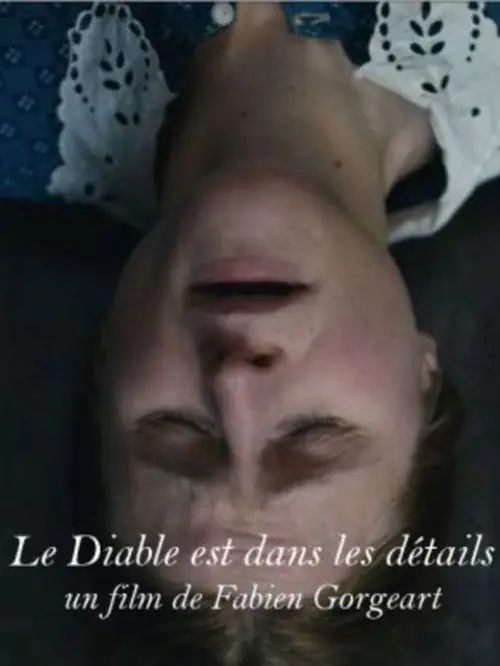
The short film format demands a particular kind of discipline: the compression of narrative, theme, and emotional impact into a duration that forbids the leisurely development available to the feature. The Devil is in the Details rises to this formal challenge with a work of quiet devastation that draws its power from the collision between the intimate and the institutional, the personal and the diagnostic. Set in mid-nineteenth-century France, the film follows Alexina, a trainee school teacher in a convent for young girls, whose experience of unbearable physical suffering leads to a medical examination that will alter the entire trajectory of an existence. The examining physician, confronted with a body that defies the binary certainties upon which his profession and his society are founded, makes a determination that Alexina's masculinity prevails — a pronouncement delivered with the clinical authority of science but freighted with the full weight of a culture's terror of ambiguity. The film's genius is its refusal to treat this moment as either tragedy or liberation in any simple sense; it is instead a rupture, a point at which the narrative of a life is seized by forces beyond individual control and rewritten according to a logic that Alexina must labor, in the film's subsequent passages, to understand and to survive. The director's approach is characterized by a restraint that borders on austerity, a choice that intensifies rather than diminishes the emotional impact of the material. The camera observes Alexina with a tenderness that never tips into voyeurism, maintaining a respectful proximity that honors the character's privacy even as the narrative demands that we witness the most intimate violations of bodily autonomy. The convent setting is rendered as a space of ambiguous refuge — protective and imprisoning in equal measure, its routines of prayer and pedagogy providing a structure that is both comforting and confining. The cinematography employs a muted, naturalistic palette that evokes the period without fetishizing it, the soft greys and creams of the convent walls serving as a canvas upon which the vividness of Alexina's internal experience is projected. Thematically, the film engages with questions that are at once historically specific and urgently contemporary: the authority of medical discourse to define and police the boundaries of gender, the violence of the diagnostic gaze, the struggle for self-determination in a world that grants individuals no jurisdiction over their own bodies. The film does not impose a twenty-first-century vocabulary onto its nineteenth-century material; it allows the historical distance to generate its own critical perspective, trusting the audience to recognize the continuities that connect Alexina's ordeal to the present without requiring the film to articulate them. The emotional resonance of the work is carried by the central performance, which navigates the character's journey from confusion to pain to the tentative beginnings of self-possession with a subtlety that rewards close attention. The face becomes the primary landscape of the film, and the actor's ability to register the smallest shifts in feeling — a flicker of hope, a shadow of despair, a hardening of resolve — transforms the close-up into a site of profound dramatic tension. The cultural significance of The Devil is in the Details extends beyond its specific historical moment: it contributes to an ongoing conversation about the representation of gender variance in cinema, a conversation that has too often been dominated by narratives of tragedy or sensationalism. The film offers something rarer and more valuable — a portrait of survival that does not deny the cost of survival, a recognition that the path forward is not a triumphant overcoming but a negotiation with circumstances that were never of one's own choosing. The title, with its proverbial resonance, suggests that the truth of a life resides not in grand gestures but in the accumulation of small, particular moments — the details that the devil, and the cinema, must attend to with the utmost care.
Source Reference
Original archive log: https://www.themoviedb.org/movie/521933?language=en-US