INT. GALLERY ROOM — SCI-FI · TOMORROW'S FRAME — DAY
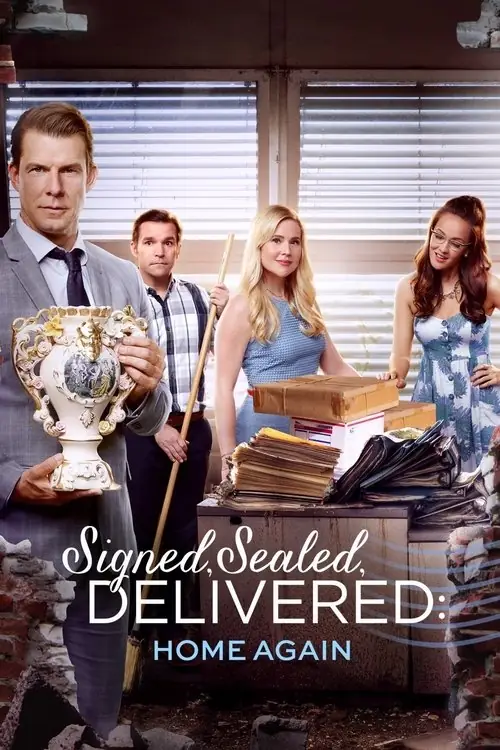
The third installment in Martha Williamson's faith-inflected television film franchise continues the series' gentle exploration of community, moral obligation, and the quiet heroism of ordinary people doing their jobs with extraordinary dedication. Operating within the constraints of the Hallmark Movies and Mysteries template—a mode of storytelling that has been too readily dismissed by critics who mistake gentleness for superficiality—the film nevertheless manages to locate genuine philosophical stakes within its deliberately modest narrative architecture. The premise, centered on a team of postal detectives known as the Postables who trace the provenance of an antique vase to a family struggling to preserve their farm, establishes a framework for examining the tension between procedural correctness and the higher claims of conscience. The vase, as a physical object, functions as a MacGuffin of unusual emotional density—not merely a thing to be delivered but a repository of memory, sacrifice, and intergenerational connection that carries the weight of lives lived and futures imperiled. The film's engagement with questions of legality versus morality operates with a sophistication that belies the production's unassuming surface. The Postables are confronted with a choice that no regulation manual can adjudicate: whether to follow the letter of the law, which would require them to deliver the vase to its legal owner, or to honor what they understand to be the deeper justice of the situation, which would keep the object with the family whose history is embedded in its very materiality. This dilemma is not resolved through easy sentiment but through a process of deliberation that takes seriously the competing claims of duty and compassion. The film's visual language, while constrained by television budgets, demonstrates a thoughtful approach to the depiction of interior spaces. The contrast between the sterile efficiency of the Dead Letter Office and the lived-in warmth of the family farm creates a visual argument about the relationship between bureaucratic modernity and the more organic rhythms of rural tradition. The ensemble cast, led by Eric Mabius, Kristin Booth, Crystal Lowe, and Geoff Gustafson, has by this point in the franchise developed a chemistry that allows for emotional beats to land with the unforced naturalism of long familiarity. Their performances are calibrated to the specific register of the material—neither overselling the drama nor underplaying the stakes, but finding the precise midpoint where sincerity and restraint coexist. The film's spiritual dimension, a hallmark of Williamson's work since her Touched by an Angel years, is woven into the narrative fabric with a lightness of touch that avoids the didacticism that often mars faith-based entertainment. The characters' moral reasoning is informed by their beliefs without being reduced to them, and the film's ultimate argument—that doing the right thing sometimes requires transcending the rules that are supposed to define right action—resonates far beyond any particular religious framework. In an era of increasingly polarized discourse about values, Home Again offers a model of ethical engagement that is simultaneously principled and flexible, rooted in tradition yet responsive to the particularities of individual circumstance. It is a small film about big ideas, and its modesty is not a limitation but a deliberate artistic choice—the aesthetic equivalent of the humility it champions as a virtue.
Source Reference
Original archive log: https://www.themoviedb.org/movie/473896?language=en-US