INT. GALLERY ROOM — HORROR · SHADOW GALLERY — DAY
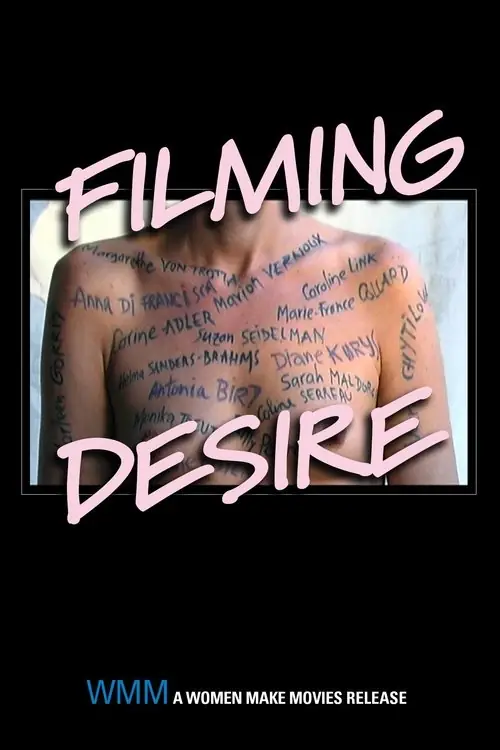
Marie Mandy's documentary Filming Desire: A Journey Through Women's Cinema undertakes an ambitious cartography of the female gaze across national boundaries, historical periods, and aesthetic traditions. The film assembles a remarkable constellation of filmmakers—from established luminaries such as Agnès Varda and Catherine Breillat to emerging voices like Moufida Tlatli and Carine Adler—and organizes their testimonies into a sustained argument about the relationship between gender, authorship, and visual representation. The documentary's central thesis, articulated through accumulation rather than declaration, is that women's filmmaking is not a genre but a counter-tradition—a parallel history of cinema that has developed its own formal strategies, its own preoccupations, and its own relationship to the apparatus of the camera.
The film's structural intelligence manifests in its organization of these diverse voices into a coherent dialogue. Varda, with her characteristic blend of intellectual rigour and playful curiosity, articulates the philosophical foundations of a feminist filmmaking practice that refuses the binary between political commitment and aesthetic pleasure. Breillat brings her unflinching attention to the body and its desires, arguing for a cinema that does not merely represent female sexuality but restructures the very terms of its representation. The juxtaposition of these veteran practitioners with relative newcomers creates a temporal depth that is essential to the film's argument: the counter-tradition is not a recent invention but a living inheritance, passed from one generation of filmmakers to the next.
CUT TO: THE WORK UNFOLDS
The documentary's formal modesty—it is essentially a film of talking heads, archival clips, and occasional observational passages—belies its sophistication. Mandy understands that the radicalism of her project lies not in visual experimentation but in the simple act of granting these filmmakers the authority to theorize their own practice. The film refuses the conventional documentary posture of the neutral observer, positioning itself instead as an active participant in the tradition it documents. This self-awareness is crucial: Filming Desire is not merely a film about women's cinema but a work of women's cinema, one that enacts the principles it describes.
The cultural significance of Mandy's project extends beyond its immediate subject matter. By tracing the connections between filmmakers working in radically different contexts—post-revolutionary Tunisia, multicultural Britain, arthouse France—the film demonstrates that the counter-tradition is not a Western phenomenon but a global one. The specific concerns of each filmmaker are shown to be both culturally particular and structurally connected, variations on a shared set of questions about power, representation, and the possibility of an alternative visual language. Filming Desire is an essential document for anyone interested in the history of cinema, the politics of representation, and the ongoing project of imagining a film culture that is genuinely plural.
Source Reference
Original archive log: https://www.themoviedb.org/movie/465362?language=en-US