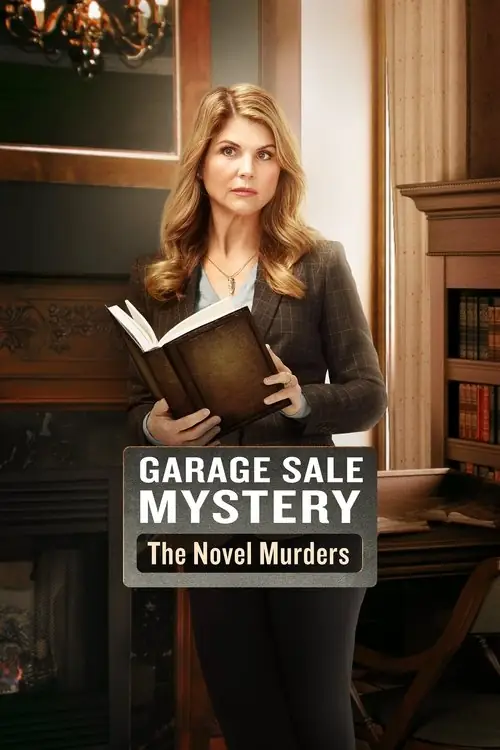
INT. GALLERY ROOM — SCI-FI · TOMORROW'S FRAME — DAY
This installment in the long-running Hallmark mystery franchise, part of the Garage Sale Mystery series that headlined the network's signature mystery wheel, represents a specific subgenre of televisual entertainment: the cozy whodunit, where the amateur sleuth operates within a recognizable, small-scale community and the violence, while thematically present, remains largely offscreen. The film's central conceit—a killing staged to mirror the events of a classic mystery novel—introduces a metafictional layer that distinguishes this entry from its predecessors, inviting the audience to engage in a dual-layered puzzle: deciphering both the murderer's identity and the literary source material from which the crime draws its inspiration. Lori Loughlin returns as Jennifer Shannon, the antique shop proprietor whose preternatural talent for uncovering homicidal patterns once again draws her into an investigation that the local constabulary would prefer remained within their jurisdiction.
The narrative architecture follows the established formula of the cozy mystery tradition with disciplined fidelity: the discovery of the body, the initial suspicion cast upon the wrong party, the accumulation of clues that the protagonist alone can synthesize into a coherent theory, and the climactic confrontation in which the perpetrator is revealed. The direction, helmed by Norma Bailey, maintains a steady, unhurried pace appropriate to the material, allowing the procedural elements to unfold with the methodical rhythm of a jigsaw puzzle being assembled. The cinematography operates within the warm, softly lit visual grammar characteristic of the Hallmark aesthetic, favoring medium shots and two-shots that emphasize character interaction over atmospheric dread. The production design of Jennifer's antique shop and the victim's residence serves a dual narrative function, the objects within these spaces functioning as potential clues and as extensions of character psychology.
CUT TO: THE WORK UNFOLDS
What elevates this particular entry within the franchise is the literary framing device, which allows the screenwriters to engage in a gentle dialogue with the conventions of the detective genre itself. The killer's decision to replicate a fictional murder introduces questions about the relationship between art and violence, performance and authenticity, that resonate beyond the film's modest ambitions. The script, credited to Walter Klenhard, demonstrates a working knowledge of mystery novel conventions—the locked room, the red herring, the least-likely-suspect—and deploys these tropes with a self-awareness that rewards attentive viewers. The performance ensemble, anchored by Loughlin's unflappable warmth, operates within a register of understated naturalism that suits the small-screen format and the film's emotional temperature, which prioritizes intellectual satisfaction over visceral thrills. While the production does not strain against the formal boundaries of its genre, it executes its chosen formula with the quiet competence of a well-rehearsed chamber ensemble, delivering precisely the experience its audience seeks: the mild, enjoyable tension of a puzzle solved, the reassurance of a moral order restored, and the company of a familiar protagonist whose world, however briefly disrupted by violence, will ultimately return to its comforting equilibrium.
Source Reference
Original archive log: https://www.themoviedb.org/movie/396390?language=en-US