INT. GALLERY ROOM — ACTION · MOVING FRAMES — DAY
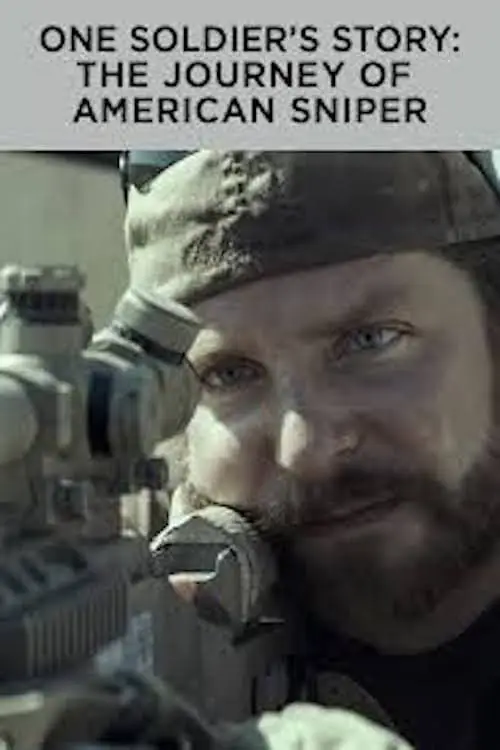
This behind-the-scenes documentary functions as a companion piece to Clint Eastwood's American Sniper, illuminating the considerable artistic and logistical challenges that attended the translation of Chris Kyle's controversial memoir to the screen. The film grants access to the collaborative process by which Eastwood, his creative team, and the principal cast navigated the treacherous terrain between hagiography and honest reckoning, between the demands of dramatic narrative and the responsibilities of biographical representation. The documentary's value lies not merely in its function as a making-of chronicle but in its capacity to reveal the ethical negotiations that underpin the production of a war film in an era of ongoing military engagement. The documentary is particularly illuminating in its treatment of Bradley Cooper's transformation into the role of Kyle. Cooper's physical metamorphosis—the weight gain, the exhaustive weapons training, the vocal modulation into a Texas drawl—is presented not as a bullet-pointed list of actorly sacrifices but as a sustained inquiry into the nature of embodied performance. The actor's visits with military veterans and his immersion in the culture of the SEAL community are documented with a respect that avoids both sentimentality and detachment. The film captures the peculiar dynamic by which an actor's process of inhabiting a real person's life becomes, in its own way, a form of bearing witness. Eastwood's directorial methodology receives thorough examination, and the documentary confirms what his collaborators have long attested: a working style of extraordinary economy and trust. The veteran filmmaker's approach to the combat sequences—his insistence on clarity over chaos, his preference for performance over pyrotechnics, his willingness to let moments of silence do the work that other directors would assign to dialogue—emerges as a coherent philosophy of cinematic representation. Sienna Miller's contributions as Taya Kyle are given appropriate attention, and the documentary's treatment of the domestic scenes suggests that the most emotionally demanding material in the film was not the battlefield sequences but the intimate reckonings between husband and wife. The documentary does not shy away from the controversies that surrounded both Kyle's memoir and the film's reception. It acknowledges, without resolving, the question of how a democratic society should represent its wars and its warriors—whether the act of dramatizing a soldier's experience necessarily involves a political stance, and whether the aesthetic choices of a filmmaker constitute a form of argument. The creative team's reflections on these questions are presented with a candor that elevates the documentary beyond promotional material into something approaching genuine inquiry. One Soldier's Story is ultimately a film about the ethics of representation, about the chasm between lived experience and its cinematic reconstruction, and about the peculiar burden borne by artists who attempt to bridge that distance.
Source Reference
Original archive log: https://www.themoviedb.org/movie/366929?language=en-US