INT. GALLERY ROOM — ACTION · MOVING FRAMES — DAY
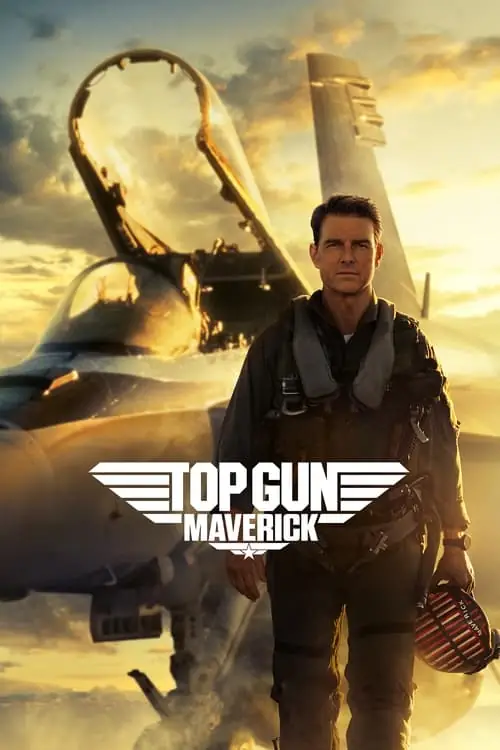
Joseph Kosinski's "Top Gun: Maverick" arrives as a legacy sequel that transcends the cynical calculus of the nostalgia economy to become something genuinely moving: a meditation on mortality, obsolescence, and the stubborn dignity of refusing to fade quietly into irrelevance. Tom Cruise, now inhabiting Pete Mitchell with the accumulated weight of three-plus decades of lived experience, delivers a performance that functions as both a continuation of a beloved character and a quietly devastating self-portrait of a star confronting his own finitude. The film's opening sequence, a near shot-for-shot recreation of the original's carrier-deck montage set to Kenny Loggins's "Danger Zone," operates as a kind of cinematic madeleine—but the film quickly pivots from comfort to confrontation, forcing Maverick to reckon with a world that has moved past him, where pilots are increasingly viewed as obsolescent components in an age of drone warfare and algorithmic precision.
The narrative architecture is elegantly simple: Maverick is recalled to the elite fighter-pilot academy not as a student but as an instructor, tasked with preparing a cohort of the Navy's finest for an impossibly precise bombing run against a rogue state's uranium enrichment facility. The mission itself, a low-altitude, terrain-hugging sprint through a canyon defended by surface-to-air missile batteries, is a MacGuffin of the highest order, a pretext for the film's genuine concerns. What "Top Gun: Maverick" is actually about is the relationship between Maverick and Bradley "Rooster" Bradshaw, the son of his deceased wingman Goose—a young man whose resentment toward Maverick for blocking his naval academy application has calcified into a bitter, simmering grievance. The film's emotional core is not the mission but the slow, painful process of two men, bound by grief and guilt, finding their way toward a reconciliation that can never fully heal the wound they share.
CUT TO: THE WORK UNFOLDS
The aerial cinematography, captured by Claudio Miranda using cameras mounted inside actual F/A-18 Super Hornet cockpits, represents a landmark achievement in practical filmmaking. The sequences are not merely thrilling but spatially coherent in a way that digital spectacle rarely achieves; the viewer understands the geography of each engagement, the vectors of pursuit, the terrifying proximity of rock walls and enemy fire. The actors, trained to withstand the punishing G-forces of actual flight, wear their physical discomfort on their faces, lending the combat sequences a documentary immediacy that no amount of post-production manipulation could simulate. This commitment to verisimilitude extends beyond mere technical bravado to become a philosophical statement: in a cinematic landscape dominated by weightless computer-generated imagery, "Top Gun: Maverick" argues for the irreplaceable value of the real, the tangible, the physically present.
The film's cultural impact cannot be separated from its moment of release, when beleaguered theaters, still reeling from the pandemic's disruption, found in Kosinski's film a potent argument for the collective experience of cinema. The climactic mission sequence, with its ticking clock and escalating stakes, generates a kind of sustained, breathless tension that functions best in a darkened room full of strangers, all holding the same breath. "Top Gun: Maverick" is, in the final analysis, a film about legacy—about what we leave behind, about the students who carry our lessons forward, about the possibility that the final chapter of a life might be its most meaningful. It is a blockbuster with a broken heart, a spectacle that earns its emotions through the patient accumulation of character detail rather than the manipulative shortcuts of sentiment. For a film about speed, it is remarkably patient; for a film about war, it is deeply humane.
Source Reference
Original archive log: https://www.themoviedb.org/movie/361743?language=en-US