INT. GALLERY ROOM — HORROR · SHADOW GALLERY — DAY
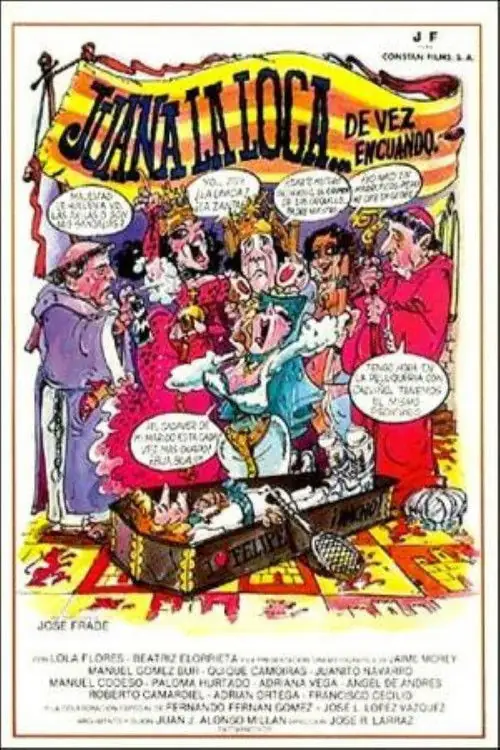
José Ramón Larraz's 1983 comedic reimagining of the life of Queen Joanna of Castile stands as one of Spanish cinema's most irreverent and oddly endearing historical satires. Rather than treating the "Mad Queen" with the solemnity typically reserved for royal biographies, Larraz approaches the material with a wink and a nudge, transforming the tragic contours of Joanna's existence—her obsessive love for Philip the Handsome, her forced confinement, her political marginalization—into the stuff of buoyant, almost vaudevillian farce. The film operates within a distinctly Spanish tradition of demystifying national icons through humor, a lineage that stretches from the picaresque novels of the Golden Age through to the esperpento aesthetics of Valle-Inclán. Lola Flores, the legendary Andalusian singer and dancer, brings an extraordinary physicality and volcanic charisma to the title role, her performance oscillating between broad comedic gestures and moments of startling vulnerability that hint at the genuine pathos beneath the laughter. The film's tonal instability—veering from slapstick to melancholy without warning—might read as inconsistency to audiences accustomed to Hollywood's rigid genre boundaries, but it is precisely this unpredictability that gives the picture its peculiar vitality. Larraz composes his frames with a painter's sensibility, drawing upon the compositions of Velázquez and Goya to create tableau-like arrangements that ground the absurdity in a recognizable visual language of Spanish artistic heritage. The costuming and production design, while clearly working within budgetary constraints, manage to evoke the opulence of the Habsburg court through clever use of color and texture rather than lavish expenditure. What emerges is a portrait of monarchy stripped of its mystique, a reminder that the figures we enshrine in historical memory were, at their core, simply human beings driven by the same passions and frailties that animate all of us. The film's engagement with gender politics, though never didactic, anticipates contemporary discourse about the historical treatment of powerful women who refused to conform to patriarchal expectations. Joanna's supposed madness becomes, in Larraz's reading, a convenient label applied by men who could not tolerate a woman's autonomy. The picture ultimately asks us to laugh not at Joanna but at the absurdity of the systems that sought to contain her, and in doing so, it transforms what could have been a slight historical comedy into something far more resonant and intellectually satisfying.
Source Reference
Original archive log: https://www.themoviedb.org/movie/30895?language=en-US