INT. GALLERY ROOM — HORROR · SHADOW GALLERY — DAY
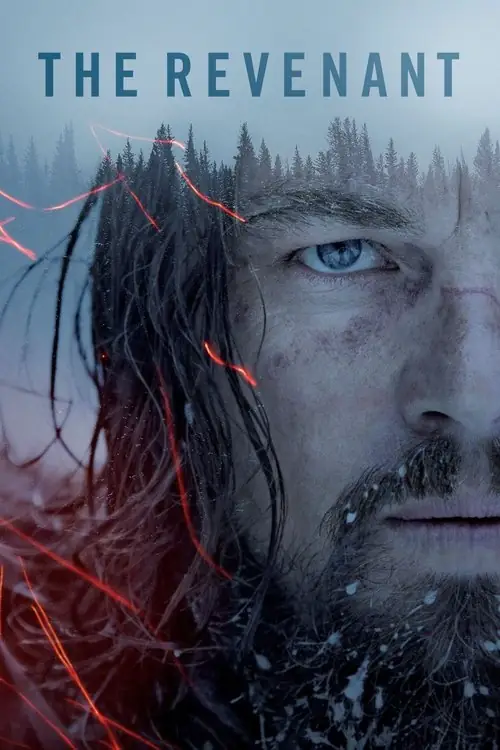
Alejandro González Iñárritu's 2015 survival epic represents a radical departure from the director's earlier experiments with fractured temporality and interlocking narrative structures, committing instead to a mode of filmmaking that is almost preternaturally linear, physical, and elemental. The film strips the revenge narrative to its barest essentials—a man left for dead, a journey across impossible terrain, a reckoning deferred but never abandoned—and then rebuilds it at a scale of almost unbearable sensory intensity. Emmanuel Lubezki's cinematography, executed almost entirely in natural light across some of the most unforgiving landscapes on the North American continent, achieves a quality of presence that transcends the merely beautiful to approach the sublime. Every frame carries the weight of the conditions under which it was captured: the bitter cold that seeps into the actors' bones, the actual distances traversed, the genuine physical exhaustion that registers in every labored breath and trembling muscle. Leonardo DiCaprio's performance as Hugh Glass is one of those rare instances in which an actor's physical commitment to a role becomes indistinguishable from the character's ordeal. Stripped of the verbal dexterity that has been the hallmark of his most celebrated work, DiCaprio is forced to communicate through the grammar of the body—through the way Glass moves, or fails to move, through the sounds that escape him when language is unavailable, through the sheer animal determination that burns in his eyes even as the rest of him seems to be dying. The celebrated bear attack sequence, a masterwork of digitally assisted practical filmmaking, operates as a kind of cinematic primal scene, a moment of such visceral horror that it resets the viewer's entire relationship to the film's subsequent two hours. After witnessing what Glass endures, every subsequent obstacle—the freezing rivers, the treacherous cliffs, the human predators—registers as both terrible and, paradoxically, manageable. The film's engagement with the natural world resists romanticization. Iñárritu presents the American wilderness not as a cathedral of sublimity but as a zone of absolute indifference to human suffering, a landscape that will swallow the unwary without malice or mercy. The recurring motif of breath—visible in the cold air, labored, extinguished, restored—becomes the film's governing metaphor, a reminder that survival is not a state but a process, something that must be perpetually renewed in each moment. The cultural politics of the film, particularly its representation of Indigenous characters and the frontier violence that defined the era, have generated legitimate critical debate, and the film's treatment of these themes is more nuanced than its detractors allow while remaining imperfect. Ryuichi Sakamoto's score, augmented by Alva Noto and Bryce Dessner, operates as a kind of sonic weather system, its drones and pulses suggesting the vast, inhuman rhythms of the natural world rather than the emotional cues of conventional film music. The Revenant is a film of almost punishing grandeur, a work that demands to be experienced rather than merely watched, and it stands as a landmark in the long tradition of cinema's fascination with the limits of human endurance. Whether one receives it as a triumph of cinematic craft or an exercise in beautiful brutality—and it is, in truth, both—its power as a sensory experience is undeniable, a reminder of cinema's unique capacity to make us feel the world through the bodies of others.
Source Reference
Original archive log: https://www.themoviedb.org/movie/281957?language=en-US