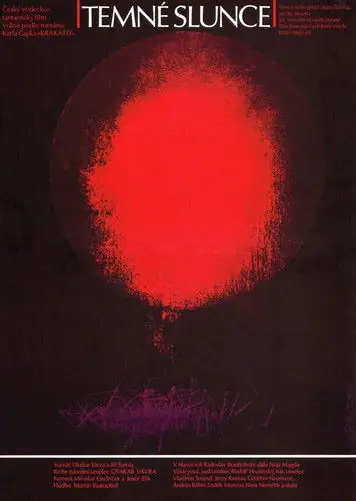
INT. GALLERY ROOM — SCI-FI · TOMORROW'S FRAME — DAY
This cinematic reimagining of Otakar Vávra's 1948 atomic-age thriller Krakatit operates within the distinguished tradition of Eastern European science fiction that privileges philosophical inquiry over spectacle. The narrative follows a gifted engineer named Prokop whose laboratory breakthroughs yield a compound of unimaginable destructive potential—the eponymous Krakatit—a discovery that instantly transforms him from a private researcher into the most hunted man on the geopolitical chessboard. What unfolds is not merely a thriller about the race to control a weapon but a sustained meditation on the moral responsibility of the scientist in an age when theoretical physics has definitively outpaced ethical wisdom. The film's aesthetic vocabulary draws heavily from the expressionist tradition, constructing a visual world where the shadows of totalitarian ambition loom as tangibly as any character. The cinematography deploys stark chiaroscuro contrasts that evoke the moral chiaroscuro at the film's philosophical core: the boundary between creation and destruction, between knowledge pursued for its own sake and knowledge weaponized by the cynical machinery of state power. The laboratory sequences, bathed in the cold blue-white luminescence of scientific apparatus, function as a kind of secular cathedral—a space of pure inquiry that the world outside, with its intelligence agencies and imperial designs, is determined to desecrate. Prokop's journey carries unmistakable echoes of the Faust legend, updated for an era in which the bargain with dark forces is no longer supernatural but institutional. The various agents who circle him—representing competing national interests and ideological blocs—are rendered not as cartoonish villains but as disturbingly plausible functionaries of systems that have normalized the pursuit of apocalyptic capability. The film's most unnerving insight is its suggestion that the difference between the scientist who creates a weapon and the bureaucrat who deploys it is ultimately one of degree rather than kind; both are implicated in a chain of causality that leads inexorably toward the abyss. The remake distinguishes itself from its predecessor through a more psychologically nuanced portrayal of its protagonist. Where Vávra's original emphasized the thriller mechanics, this version dwells in the spaces between action—the sleepless nights, the haunted recognitions, the gradual dawning awareness that knowledge, once released into the world, can never be called back. The final act, in which Prokop must decide what sacrifice he is willing to make to contain the monster he has birthed, achieves a genuinely tragic dimension. Dark Sun thus functions simultaneously as a gripping exercise in Cold War-era paranoia and as a timeless inquiry into the oldest question science has posed to human conscience: just because we can, does it follow that we should?
Source Reference
Original archive log: https://www.themoviedb.org/movie/278861?language=en-US