INT. GALLERY ROOM — NOIR · SHADOW & SMOKE — DAY
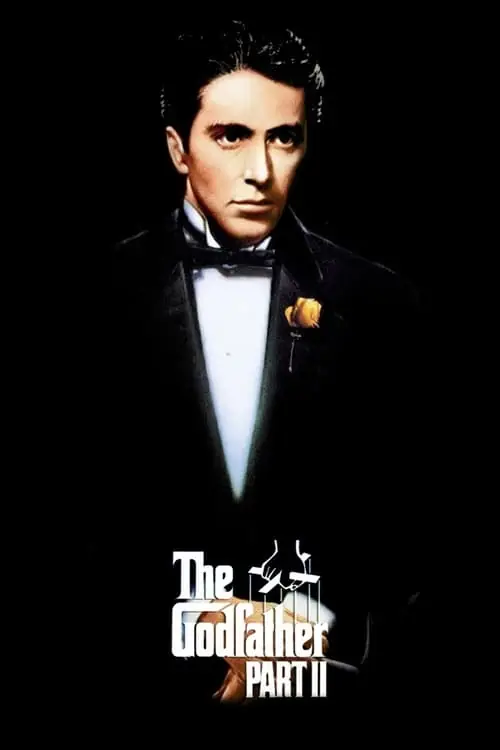
Francis Ford Coppola's monumental sequel to his genre-defining mafia epic stands as arguably the most ambitious second chapter in the history of American cinema. Rather than merely extending the Corleone family chronicle forward in time, Coppola constructs a luminous dual-narrative architecture that oscillates between two distinct historical moments: the rise of a young immigrant in early twentieth-century New York City, and the calculated consolidation of criminal empire by his son decades later. This structural gambit transforms the film into something far more penetrating than a conventional gangster picture—it becomes a meditation on the mutability of the American Dream, the corrosion of moral identity across generations, and the tragic irony by which the very institutions one builds to protect family become the instruments of its spiritual dissolution. The visual language that cinematographer Gordon Willis brings to the enterprise is nothing short of revolutionary. The sepia-washed passages following the young Vito Andolini—later Corleone—through the tenements of Little Italy shimmer with a golden, nostalgic patina that evokes both the warmth of memory and the hardscrabble reality of immigrant existence. Robert De Niro's wordless performance in these sections, communicating volumes through the angle of a shoulder or the deliberate stillness of a gaze, represents a masterclass in behavioral acting. The sequence in which Vito stalks the predatory Don Fanucci across the rooftops of a festival-celebrating neighborhood, wrapping a pistol in a towel with ceremonial precision, remains one of the most exquisitely calibrated set pieces in film history, marrying Hitchcockian suspense to operatic inevitability. Counterposed against this origin story is the increasingly hermetic world of Michael Corleone, rendered in shadows so deep they seem to swallow entire rooms. Al Pacino's portrayal of Michael's descent into a purgatory of his own making is a study in the progressive evacuation of the soul. Where Brando's Don Vito governed through a rough-hewn patriarchal warmth, however compromised, Michael's regime operates through a chilling calculus of betrayal and preemptive violence. The film's genius lies in the way it traces how the very qualities that made Vito beloved—his fierce loyalty, his strategic patience, his capacity for principled ruthlessness—mutate in Michael into isolation, paranoia, and a capacity for intimate betrayal that culminates in the devastating final image: a man utterly alone in his compound, drowning in the success he has so meticulously engineered. Beyond its technical virtuosity—the impeccable period production design by Dean Tavoularis, the mournful strains of Nino Rota's score, the deliberately disorienting editing rhythms—The Godfather Part II endures because it grasps something essential about the American experience. It comprehends that the pursuit of security and legitimacy can itself become a form of corruption, that the immigrant's dream of providing a better life for one's children contains within it the seeds of its own undoing. Coppola transforms what could have been a mere extension of a lucrative franchise into a work of Shakespearean gravity, a film that earns its place alongside the great tragedies of world literature.
Source Reference
Original archive log: https://www.themoviedb.org/movie/240?language=en-US