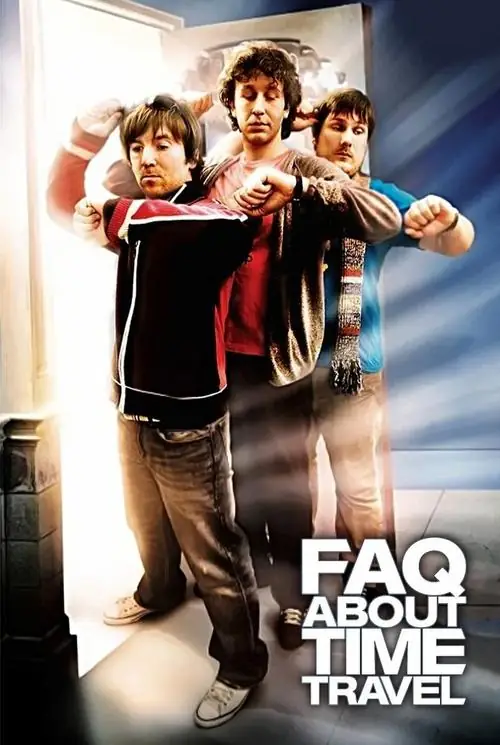
INT. GALLERY ROOM — SCI-FI · TOMORROW'S FRAME — DAY
Gareth Carrivick's Frequently Asked Questions About Time Travel exemplifies the distinctively British approach to genre cinema: science fiction filtered through the lens of pub culture, temporal paradox explored with the same deadpan wit that might be applied to a dispute over the last round of drinks. The film situates its narrative almost entirely within the confines of a neighborhood public house, transforming that most quotidian of British institutions into a nexus of chronological instability. Three friends—two earnest enthusiasts of speculative fiction and one world-weary skeptic—find their casual evening derailed by the intrusion of temporal anomalies that force them to confront the practical implications of the theoretical conversations they have been having for years. The pub setting is not merely a budget-conscious production choice but a conceptually elegant constraint: the film understands that the most profound dislocations of reality are most effectively rendered against the backdrop of the stubbornly ordinary, that the cosmic becomes legible only when it disrupts the domestic.
The screenplay, credited to Jamie Mathieson, demonstrates a sophisticated grasp of time-travel narrative conventions while simultaneously subverting them through the application of rigorously mundane logic. The characters are archetypes of a particular strain of British masculinity—the hobbyist, the obsessive, the disaffected ironist—and their interactions generate comedy from the collision between the grandiose implications of temporal manipulation and the petty concerns of men whose primary relationship to the universe is mediated through science fiction media. The film's treatment of temporal paradox avoids both the sterile cleverness of puzzle-box narratives and the hand-waving mysticism of lesser genre entries, instead grounding its speculative elements in the concrete consequences for characters who must navigate a reality that has suddenly become porous to impossibilities. The dialogue crackles with the particular energy of intelligent people arguing about things that cannot possibly matter—until, suddenly, they matter enormously.
CUT TO: THE WORK UNFOLDS
The performances anchor the film's tonal balancing act with considerable skill. The central trio—Chris O'Dowd, Marc Wootton, and Dean Lennox Kelly—each bring distinctive registers that complement rather than compete. O'Dowd, in the years before his international breakthrough, demonstrates the understated comic timing that would become his signature, his character's exasperated rationality serving as the audience's surrogate through increasingly irrational circumstances. Anna Faris, as a time traveler from a future where the film's events have become legendary, provides a crucial external perspective that reframes the protagonists' bumbling as inadvertent heroism. The film's willingness to embrace its own modest scale—no CGI spectacles, no world-threatening stakes, no pretensions to philosophical profundity—becomes, paradoxically, the source of its genuine charm. It is a film that understands that the most interesting question about time travel is not whether it is possible but what it would reveal about the people who find themselves caught in its currents.
Frequently Asked Questions About Time Travel occupies a valuable niche in the ecosystem of British cinema: the low-budget genre film that compensates for its material limitations with conceptual ambition and linguistic wit. It belongs to a tradition that includes the early work of Edgar Wright and the television comedy of the BBC's golden age—work that understands that the British pub, with its peculiar combination of conviviality and territoriality, its unwritten codes of conduct and its tolerance for eccentricity, constitutes a microcosm of national character. The film's cultural significance lies in its demonstration that genre cinema need not be defined by spectacle, that the most satisfying speculative narratives are often those that remain tethered to the recognizable textures of lived experience. By the time the temporal loops resolve and the pub returns to its normal state of gently inebriated stasis, the audience has been treated to a reminder that the most compelling science fiction is ultimately about the people who find themselves, however improbably, at the center of the inexplicable.
Source Reference
Original archive log: https://www.themoviedb.org/movie/22494?language=en-US