INT. GALLERY ROOM — ACTION · MOVING FRAMES — DAY
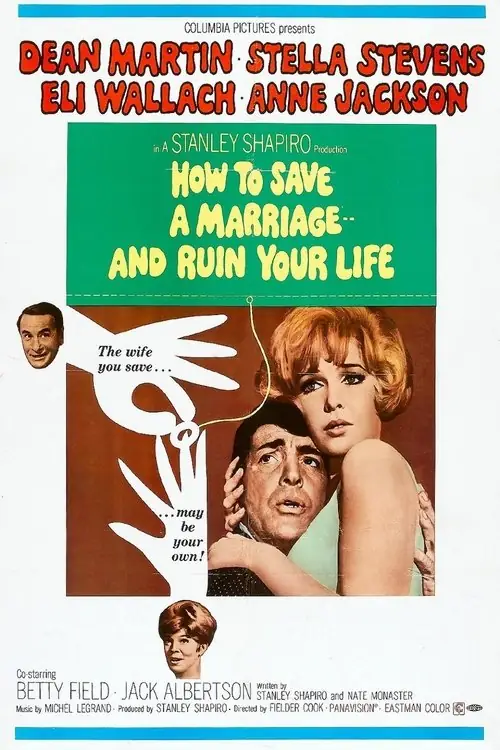
The 1960s romantic comedy occupies a distinctive position in Hollywood's cultural history—a genre suspended between the fading proprieties of the studio system and the gathering energies of the sexual revolution. How to Save a Marriage and Ruin Your Life represents a particularly fascinating specimen of this transitional moment, a film that simultaneously participates in and subverts the conventions of its genre. The narrative engine is a classic farcical misunderstanding: a wealthy and unattached man named David Sloane constructs an elaborate fantasy in which his closest friend's companion, Carol Corman, is the other woman in an adulterous arrangement. His decision to intervene—to save a marriage that exists only in his imagination—sets in motion a cascade of consequences that reveal the profound gap between benevolent intention and catastrophic outcome.
The film's central insight concerns the pathology of certainty. David's conviction that he has correctly diagnosed the situation, and his corresponding certainty that intervention is morally required, blinds him to the possibility that his interpretation might be catastrophically wrong. The film anatomizes this particular form of masculine arrogance with a precision that feels remarkably contemporary, tracing the ways in which the assumption of superior knowledge becomes a license for destruction. The comedic framework does not dilute this critique but rather sharpens it, allowing the film to deliver uncomfortable truths under the cover of laughter—a strategy that has served social satire since its origins in classical theatre.
CUT TO: THE WORK UNFOLDS
The visual language of the film reflects the aesthetic values of its era while subtly undermining them. The production design luxuriates in the material pleasures of upper-class Manhattan—the apartments, the wardrobes, the restaurants—creating a world of seductive surfaces that the narrative proceeds to dismantle from within. The compositions frequently trap characters within frames-within-frames, doorways, and mirrors, visual metaphors for the constraints of social expectation and the distortions of perception that drive the plot. The colour palette, rich and saturated in the manner of the period, functions as a kind of ironic commentary on the emotional impoverishment it conceals.
The performances navigate the film's tonal complexity with considerable skill. The central misunderstanding requires characters to occupy multiple registers simultaneously—sincere in their delusions, comic in their misapprehensions, and ultimately tragic in the wreckage they produce. The film's resolution, while satisfying the formal requirements of the romantic comedy, does not entirely paper over the damage done along the way. The scars remain visible beneath the happy ending, a reminder that the genre's conventions are not an escape from reality but a particular way of organizing it. How to Save a Marriage and Ruin Your Life understands that the line between rescue and ruin is drawn not by intention but by the humility with which intention is held.
Source Reference
Original archive log: https://www.themoviedb.org/movie/173541?language=en-US