INT. GALLERY ROOM — ANIMATION · PAINTED FRAMES — DAY
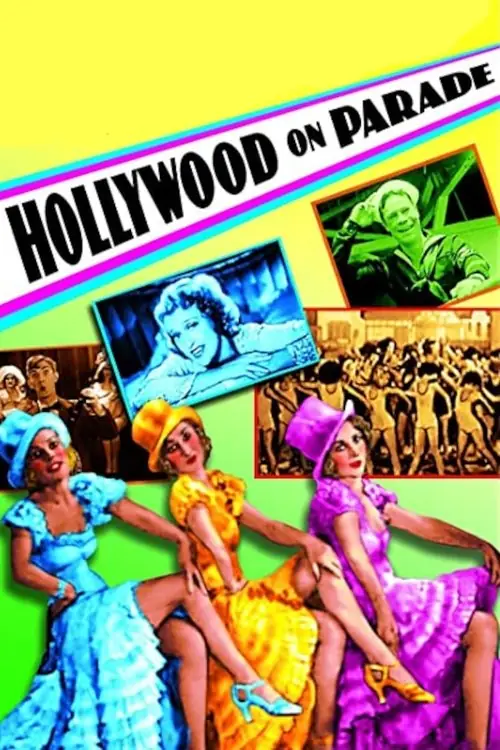
This short subject from the early 1930s belongs to a fascinating subgenre of Hollywood self-mythologization: the studio-produced curiosity that invites audiences into a hall of mirrors where the boundary between celebrity and artifact, between the living star and the waxen effigy, dissolves into a kind of giddy ontological confusion. The framing device—a wax museum after hours, presided over by the figure of comedian Eddie Borden, who steps out of his own display case to serve as emcee—is a conceit of considerable surrealist charm, anticipating by decades the postmodern fascination with simulacra and the mediated nature of stardom itself. The film's brief running time is dense with the peculiar pleasures of early sound-era experimentation. The various wax figures of Hollywood luminaries are presented as objects of veneration, each accorded a moment of display that functions as a kind of secular hagiography. The sequence involving Clara Bow's effigy, with her husband Rex Bell appearing to acknowledge the comedian's infatuation before redirecting him toward the animated figure of Betty Boop, operates on multiple registers simultaneously: it is at once a playful acknowledgment of Bow's status as a sex symbol, a bizarre piece of cross-media branding—the flesh-and-blood Paramount star yielding to the Fleischer Studios cartoon creation—and a strangely melancholic meditation on the distance between the living performer and the frozen image. The musical centerpiece—a duet between Borden and the Betty Boop figure on the standard 'My Silent Love'—captures something essential about the transitional moment in which the film was produced. The song's title itself gestures toward the recently departed era of silent cinema, now rendered as a nostalgic memory even as the talkie revolution was barely three years old. The technology of sound reproduction, the very innovation that made this short possible, is here deployed to memorialize a mode of performance that the industry had already begun to regard as obsolete. The film's brief duration contains, in embryonic form, the central paradox of Hollywood's relationship to its own history: the simultaneous impulse to preserve and to replace, to enshrine and to forget. Hollywood on Parade No. A-8 functions as a time capsule of the studio system's promotional apparatus at its most whimsically self-referential. It is a film about the machinery of fame presented through the machinery of exhibition, a document of an industry in the process of learning to consume its own mythology. For contemporary viewers, it offers not merely the antiquarian pleasure of glimpsing figures from a vanished cinematic era but a surprisingly resonant meditation on the nature of celebrity as a form of suspended animation—a condition in which the performer is simultaneously present and absent, alive and entombed, adored and devoured by the very apparatus that sustains them.
Source Reference
Original archive log: https://www.themoviedb.org/movie/157858?language=en-US