INT. GALLERY ROOM — ACTION · MOVING FRAMES — DAY
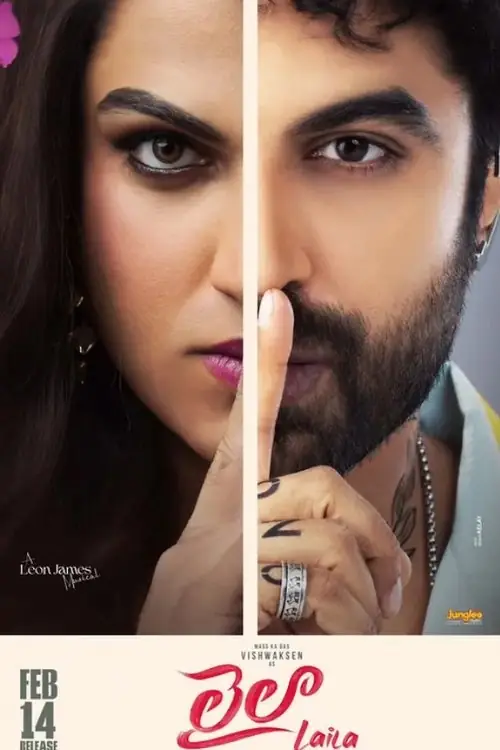
Ram Narayan's 2025 Telugu-language comedy starring Vishwak Sen enters the crowded field of Indian masala cinema with a premise that draws upon a venerable tradition of cross-dressing farce while injecting it with the particular energy of contemporary Hyderabad's old city milieu. The narrative follows a celebrated beautician named Sonu, whose professional expertise in the arts of feminine presentation becomes, through a series of escalating circumstances, the instrument of his own transformation—a forced disguise as the titular Laila that propels the film into a cascade of identity confusions, romantic entanglements, and physical comedy. The film's engagement with the traditions of Indian cinematic cross-dressing extends back through decades of popular cinema, from the mythological transformations of the silent era through the comedic masquerades of the 1970s and 1980s, but Ram Narayan distinguishes his approach through a contemporary sensibility that acknowledges the gender politics implicit in the conceit without allowing those politics to overwhelm the entertainment imperative. The old city of Hyderabad, with its distinctive architectural heritage, its labyrinthine bazaars, and its particular cultural synthesis of Hindu and Islamic traditions, provides a setting that is both visually rich and narratively generative. The cinematography makes the most of the location's inherent cinematic qualities—the interplay of light and shadow in narrow alleyways, the vibrant chaos of market scenes, the ornamental intricacy of heritage buildings—creating a visual texture that grounds the film's more extravagant comic set pieces in a recognizable and textured reality. Vishwak Sen's performance in the dual register of Sonu and Laila demands a physical dexterity and comic timing that the actor delivers with evident relish. The role requires him to navigate the gap between the character's masculine self-presentation and the femininity he must adopt, and the comedy derives not from simple mockery of gender nonconformity—a trap that lesser films of this type routinely fall into—but from the specific incongruity of this particular character, with his particular history and mannerisms, attempting to inhabit a persona for which he is spectacularly unprepared. The romantic subplot, which introduces complications arising from the fact that characters fall in love with different versions of the protagonist, engages with the Shakespearean comedy of errors tradition while maintaining a distinctly Telugu sensibility in its approach to romantic entanglement and resolution. The action sequences, when they arrive, are choreographed with the heightened physical logic of Indian commercial cinema, where the laws of physics are suspended in service of spectacle, and the transitions between comedic, romantic, and action registers are managed with the fluidity that characterizes the masala form at its best. The film's commercial success speaks to the enduring appetite for narratives that explore the permeability of identity through the safe distance of comedy, allowing audiences to contemplate questions of self-presentation, gender performance, and social expectation while remaining within the comforting framework of laughter. Laila may not aspire to the thematic profundity of India's art cinema tradition, but within the idiom of popular entertainment, it achieves something genuinely valuable: a comedy that uses the conventions of its genre not as a limitation but as a platform for a kind of cultural commentary that is all the more effective for being delivered with a smile.
Source Reference
Original archive log: https://www.themoviedb.org/movie/1403735?language=en-US