INT. GALLERY ROOM — HORROR · SHADOW GALLERY — DAY
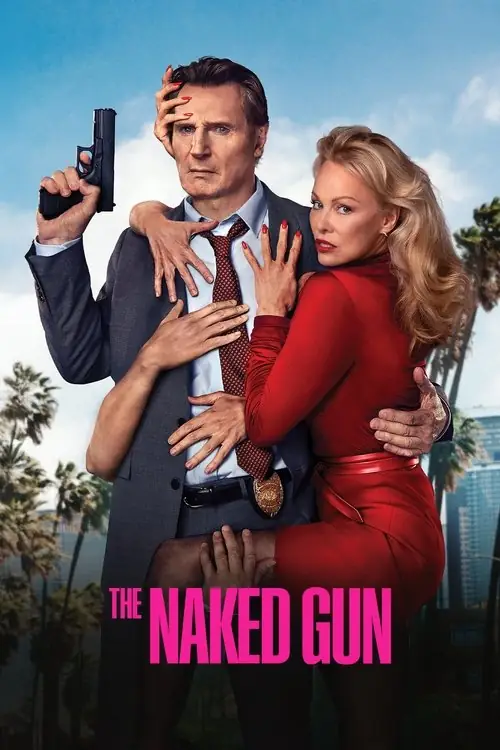
The resurrection of the Naked Gun franchise arrives as a knowing wink across decades of comedic evolution, positioning itself as both faithful homage and generational reboot. Where the original Zucker-Abrahams-Zucker trilogy flourished in the late eighties and early nineties through a relentless barrage of sight gags, deadpan non-sequiturs, and Leslie Nielsen's singular capacity for delivering absurdity with a granite countenance, this new iteration transfers the mantle to a younger Drebin who must navigate an entirely different comedic landscape. The genius of the enterprise lies in its self-awareness: the filmmakers understand that the spoof genre has itself been spoofed into near-extinction, and they respond by layering a gentle nostalgia atop the slapstick architecture. The gags arrive with a metronomic precision that recalls the golden age of Airplane! and Police Squad!, yet they are filtered through a contemporary sensibility that acknowledges how the ground rules of parody have shifted under the weight of internet culture and meme-driven humor. There is a tender affection at work here, a sense that the creative team is writing a love letter to a mode of screen comedy that feels almost classical in its construction — the elaborate set-up, the delayed payoff, the visual pun that rewards the attentive viewer who has learned to scan every inch of the frame for hidden absurdity. The film's rhythm is its primary artistic asset: the tempo never slackens, the density of comedic incident is almost exhausting, and the sheer craft of the physical comedy recalls the balletic precision of Keaton and Chaplin refracted through a distinctly American vaudevillian sensibility. Cinematographically, the picture adopts a deliberately flat, televisual aesthetic that mirrors the procedural-cop-show grammar it lampoons, a choice that becomes increasingly clever as the mayhem escalates against such an unassuming visual backdrop. Thematically, the film engages with inheritance — not merely the narrative inheritance of a son taking up his father's badge, but the cultural inheritance of a comedic tradition that must prove its relevance to an audience raised on irony. The emotional resonance emerges from the unlikeliest of places: beneath the cascade of pratfalls and puns, there is a genuine story about living up to a legacy while forging one's own identity, and the script handles this subtext with a lightness of touch that never threatens to capsize the comedy. As a cultural artifact, the film serves as a barometer of what mainstream audiences still find permissible in an age of heightened sensitivity, demonstrating that the broad, anarchic spirit of the spoof can adapt without sacrificing its essential irreverence. It is a work that will be studied by comedy scholars as a transitional text, bridging the analog era of the gag-driven farce with the self-conscious, hyper-referential mode that defines contemporary humor. The directorial vision is one of custodianship rather than reinvention, and that restraint is precisely what makes the enterprise feel so unexpectedly moving — a reminder that some comedic forms are too precious to be discarded, only to be passed along to the next generation with a sly smile and a perfectly timed banana peel.
Source Reference
Original archive log: https://www.themoviedb.org/movie/1035259?language=en-US